
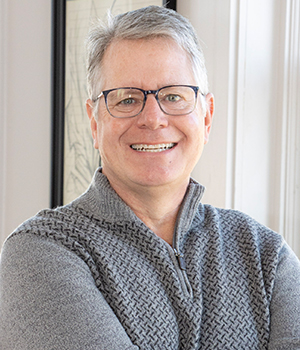
Scott Ringlein
Founder & President
The Energy Alliance Group of North America
Make your foundation your future
Scott Ringlein, the Founder and President of The Energy Alliance Group of North America (“EAG”), says, “When it comes to energy efficiency, water conservation, and renewable energy measures, there is no "one-size-fits-all" solution. Instead, we tailor the solution to the specific needs of the facility and operation, utilizing a blend of technology, funding, incentives, and comprehensive long-term operation and maintenance plans. This is what EAG calls its “Four Cores” approach to developing these types of solutions for commercial and industrial building owners." It is quite simple, Ringlein stated. It is a four-piece puzzle, but for each solution, the pieces fit together differently than before. That is what makes what we do so fun. We are always creating something new and unique, utilizing the same approach each time.”
As an optimist, Scott has consistently approached life's challenges, both professionally and personally, with a positive outlook. Like many others, Scott has overcome various challenges in his career and in operating his businesses, but he believes that learning from the past forms the foundation of his personal and professional growth. He embraces the repeatability of checklists and processes in business, believing it's important not to rely solely on memory. Repeating tasks repeatedly does not guarantee they will always follow the same sequence. Instead of investing in process developers, investors look for the next technology. Scott says that is one of the challenges he has had to overcome.
For over 12 years, Scott has always taken the same approach with his staff, partners, clients, and suppliers, treating them as family to help all of us, including EAG, to succeed. Some are shocked that EAG partners with their competitors, but Scott believes that, given the size of the clean energy market, we are better off working together so that we can have a bigger impact working together than as individuals. He often imagines, as a business owner, what would happen if we all collaborated to achieve the same goals, but without the purpose of profiting from it? When “money” is involved, collaboration becomes a competition and can make respecting each other’s input very difficult to accept. Sharing and collaborating with a single goal in mind is vital to modern organizations' longevity. During a particularly challenging point in his career and personal life, Scott came across a phrase that he continues to refer to and share with his team often: “The things that we can control and are constant are our goals. See them, picture them, breathe them, and want them., but never, ever, give up on them.”
Scott says experience-based learning, referred to as “on-the-job training,” should be a normal business practice, but only a few learn and change from it. Failing or succeeding, taking time to reflect on lessons learned, and making improvements are critical to success. Start-ups typically do not just go out of business. It is the founders who give up too early. This is where the importance of lessons learned comes into play. You can change courses if your plan isn't working. When EAG looks back on its operations, it sees a path of pivots and improvements along the way, but with the same common goal. It is not where we are going, but how we get there. That is what makes each solution enjoyable to develop, says Scott.
As a mentor to others, Scott gives discreet, impartial, and real-time advice, sharing his knowledge and lessons learned with students and other fellow entrepreneurs. When speaking at conferences and to groups of students, he continues to provide advice, which is a favorite of his. He smiles, recalling his recent work with the University of Michigan Students for Clean Energy group and a current MBA student. “The younger generation certainly gives me hope, Ringlein says; they are so engaged and incredibly eager to learn. It is energizing.” Since 2009, Scott has been an advisor to the U.S. Department of Energy (“DOE”), providing opinions to ideas submitted for federal program funding. The opportunity with the DOE was his first introduction to clean energy technologies. It was also what ignited his desire to start a company and develop clean energy solutions for building owners. For the past 10 years, Scott has been a member of the Leadership Committee for the Small Business Association of Michigan ("SBAM"). In this role, he provides input into policies, goals, and state and federal legislation that can affect SBAM’s 30,000 members.
Technology-agnostic and solution-oriented, EAG continues to monitor and learn what the latest “Four Cores” are to develop its solutions in an ever-changing industry and market. This competence and straightforward approach to solving their clients’ challenges is what sets them apart from others. Scott modestly admits that they often hear from their clients that they had never seen EAG’s approach used before. The best answer they get is, Why wouldn’t we want to do this? A project at the historic 1929 New Amadore Apartment Complex, which at the time provided heating and cooling to 63 apartment units still featuring the original 1929 windows, was one of its first examples of success. The majority of tenants expressed dissatisfaction, and the historic nature of the building made repairs challenging and expensive. The owner's initial plan was to replace 3-5 windows every year for over 20 years, with approval from Saginaw, Michigan's Historic District. The owner had recently purchased the property, had very little equity to borrow against, and, until meeting EAG, had no other options to consider. EAG developed a solution using the Property Assessed Clean Energy ("PACE") program to finance the purchase and installation of the required 281 new windows.
The owner was able to achieve this with no additional out-of-pocket costs and secure funding with a 20-year term and fixed interest rate through the PACE program. This allowed the owner to proceed with the improvement needs rather than delaying, and immediately save nearly 31% on energy and maintenance costs.
EAG prides itself on listening to the customer, a differentiator that most do not. This is an example of a completed project for Goodwill Industries. Unknown to most, Goodwill Industries operates a manufacturing plant in Detroit, Michigan, where they train and employ low-income and disadvantaged people. Before being introduced to EAG, Goodwill had received several quotes to replace its aging compressed air system in response to a request for quote (“RFQ”) and specifications they had prepared. A recurring pattern emerged: none of the responses offered a solution that aligned with the RFQ's specifications. That is when EAG came in. While EAG's proposed solution was more expensive, it was the only solution that met all of Goodwill's technical requirements, including funding options, utility incentives, a maintenance agreement, and reduced operating expenses in its first year of operation. A favorite memory that Scott shares about the project is that after the operations manager reviewed EAG’s proposal, he simply stated, “This is an easy decision; I am going to go get the additional cost approved.” EAG’s solution included rebuilding the base-load compressor system, adding a massive holding tank to reduce compressor cycling, and installing a second compressor as a backup that cycled along with the primary compressor during production to ensure equipment uptime. We replaced the entire compressed air distribution system of the plant, which resulted in an increase in air volume, compressor energy efficiency, air pressure, and payback time. A unique solution developed specifically to meet Goodwill Industries' needs.
Since its inception in 2012, EAG has continued to operate with a start-up mentality. With high odds of failure for start-ups, the need to pivot is great. There was no higher need to do so when COVID-19 arrived in the U.S. In just a few short weeks in early 2020, EAG went from its most profitable year to losing 100% of its business. After a month-long nap with his furry companion Java, a moment to pivot once again presented itself. Through a single connection, Scott and three other fellow entrepreneurs came together and formed the technology joint venture, Solar Alliance Group (“SAG”). Since its inception, the partners have completed the installation of Solar + energy storage + EV charging systems for Emmanuel Faith Church located in Escondido California, completed the in-house design and commercialization of 180kW and 350kW EV charging systems, and in 2024 will be installing three of its patented gearless dual-axis solar tracking systems at the International Brotherhood of Electrical Workers (“IBEW”) Local 58 union hall. The IBEW tracker systems, the first in Michigan, will offer covered parking for members and guests, while also producing energy for the Zero Net Energy (ZNE) Center of IBEW Local 58. SAG is also pursuing grid-scale and community solar projects nationwide, as well as developing new tracker technology with an emphasis on land dual-use for agriculture and farm animal operations. This has led to opportunities for grants and research opportunities in the field of Agrivoltaics.
Another opportunity that came along with COVID-19 was the chance for Scott to dust off the plans behind his idea for a community-shared solar program, Kilowatts For A Cause® (KW4AC"). In 2015, Scott conceived and trademarked KW4AC, which officially launched in 2022 after completing its initial sale of 5-year Climate Impact Notes on the clean energy crowdfunding platform Raise Green. KW4AC's mission is to promote the adoption of clean energy solutions and distribute a portion of the savings to a non-profit organization that aids low-income and disadvantaged groups in the local community where its installations take place. In summary, KW4AC promotes going solar, saving money, and giving back. Doing what’s right is just beneficial business, says Scott. With today's technologies, finance, tax credits, and clean energy policies, he sees EAG growing, expanding into other economic sectors, and solving global energy and environmental issues.
If asked, Scott would tell NPR’s Guy Raz, who created the show How I Built This, that some of his success was luck. Losing his job in 2008, after 20 years in the car industry, was a stroke of luck that paved the way for his opportunity with the U.S. Department of Energy and the events that have unfolded over the past 16 years. Scott says that nothing of this would have been possible without the support of his wife and all others who have come and gone in the more than 10 years since he founded EAG.

Company
The Energy Alliance Group of North America
Management
Scott Ringlein
Founder & President
The Energy Alliance Group of North America
Description
The Energy Alliance Group (EAG) is a green energy solutions and cost recovery company. We provide energy-saving products, technologies, and services for commercial, industrial, multifamily, and non-profit buildings. We also provide many energy solutions for agricultural applications.
Admired Leaders Magazine
